
How the game works
The Map is a crypto game on Ethereum. Hold the most passports of a country for 7 days and you’re its president forever: the country’s treasury is yours. When all 200 countries have presidents, the world treasury goes to the player whose countries have the biggest population.
1. The game in three steps
- Mint passports of any country. The first 10 cost 0.0005 ETH each, then the price doubles level by level.
- Hold more than anyone else. You’re the country’s candidate.
- Once the country has 50 passports, stay candidate for 7 days. You’re president and take the country’s treasury.
Every mint also pays 40% as rent to everyone holding an earlier passport of that country.
2. Passports
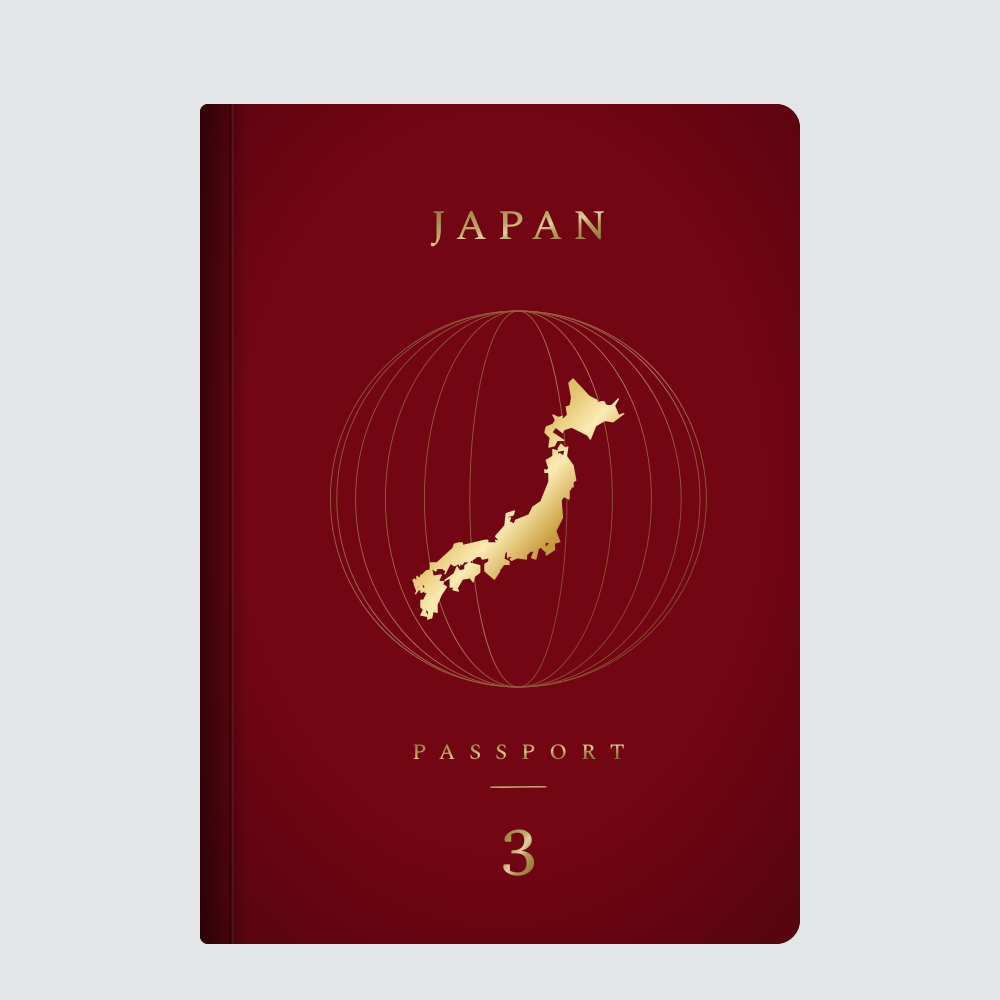
All 200 countries are open from the start. Mint as many passports as you want. Send and sell them freely.
Price. The first 10 passports of a country cost 0.0005 ETH each. Each next level is twice as big and twice as expensive. Every country has its own levels.
| Level | Passports | Price each, ETH |
|---|---|---|
| 1 | 1–10 | 0.0005 |
| 2 | 11–30 | 0.001 |
| 3 | 31–70 | 0.002 |
| 4 | 71–150 | 0.004 |
| 5 | 151–310 | 0.008 |
| 6 | 311–630 | 0.016 |
| 7 | 631–1,270 | 0.032 |
| 8 | 1,271–2,550 | 0.064 |
| 9 | 2,551–5,110 | 0.128 |
| 10 | 5,111–10,230 | 0.256 |
| … | … | … |
| 17 | 655,351–999,999 | 32.768 |
Where the money goes.
| Share | Goes to | Who gets it |
|---|---|---|
| 40% | Country treasury | The president, once the country closes |
| 40% | Rent | Holders of this country’s earlier passports |
| 10% | World treasury | The world president, with the 5% royalty on every resale |
| 10% | Author | The author |
Rent. The rent from each new passport is split equally among all earlier passports of that country. The first passport has nobody before it, so its rent goes to the treasury. Rent goes to whoever holds the passport at the moment of each mint. Claim it any time. If you sell a passport, what it earned before the sale stays yours.
Example: you mint Japan No. 3 for 0.0005 ETH. By Japan’s 50th passport you’ve earned 0.0011 ETH in rent, about 2× your price. By the 150th, 5×. From level 2 on, a passport pays for itself once its country has about 3× as many passports as when you minted it.
Citizen number. Passports are numbered in the order they were minted in their country: No. 1, No. 2, No. 3. The number never changes.
3. Elections
Candidate. The wallet holding the most passports of a country. Every passport in the wallet counts: minted, bought, received, or moved from another wallet of yours.
Overtaking. The candidate changes as soon as another wallet holds strictly more. A tie keeps the current candidate. If the candidate gives passports away and several wallets end up tied for the most, there is no candidate until one of them pulls ahead.
Countdown. Once a country has 50 passports and a candidate, a 7-day countdown runs. A new candidate starts it over. The candidate minting more doesn’t. With no candidate, the countdown stops, and the next candidate gets a fresh 7 days.
Example: Anna has 12 Peru passports, Ben has 9. Ben mints 3: 12 to 12, Anna stays. Ben mints one more: 13 to 12, Ben is the candidate and the 7 days start over.
4. Closing
If the candidate doesn’t change for 7 days, they become president forever. The country closes at that second: its passports can’t be minted or moved, and rent stops. Rent earned before that stays with the holders.
After that, each in its own transaction:
- anyone inaugurates the president: the President passport goes to the president’s wallet;
- anyone burns the country’s passports, in batches;
- the president takes the country’s treasury whenever they want.
5. World treasury
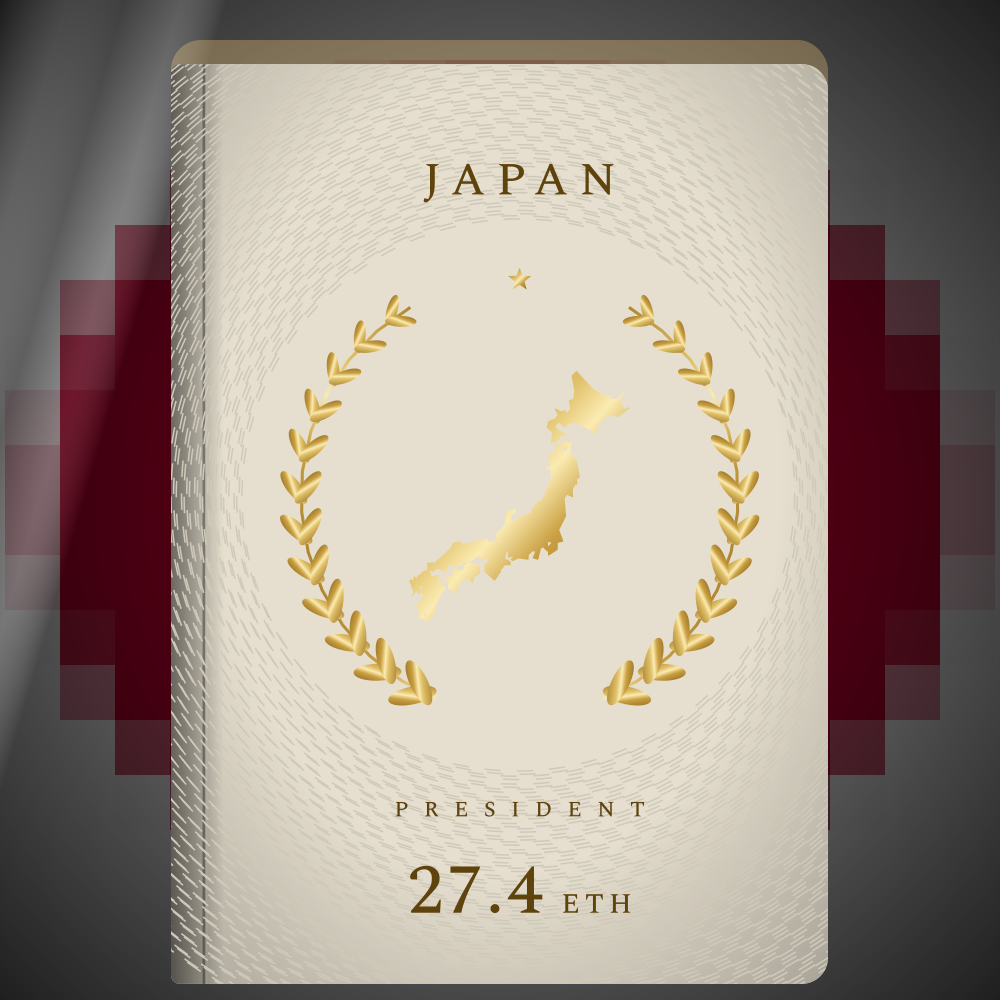
Population. Each President passport carries its country’s population: how many passports the country had when it closed. A wallet’s population is the total of the President passports it holds. Sell a President passport and its population goes with it. The country treasury stays with the president.
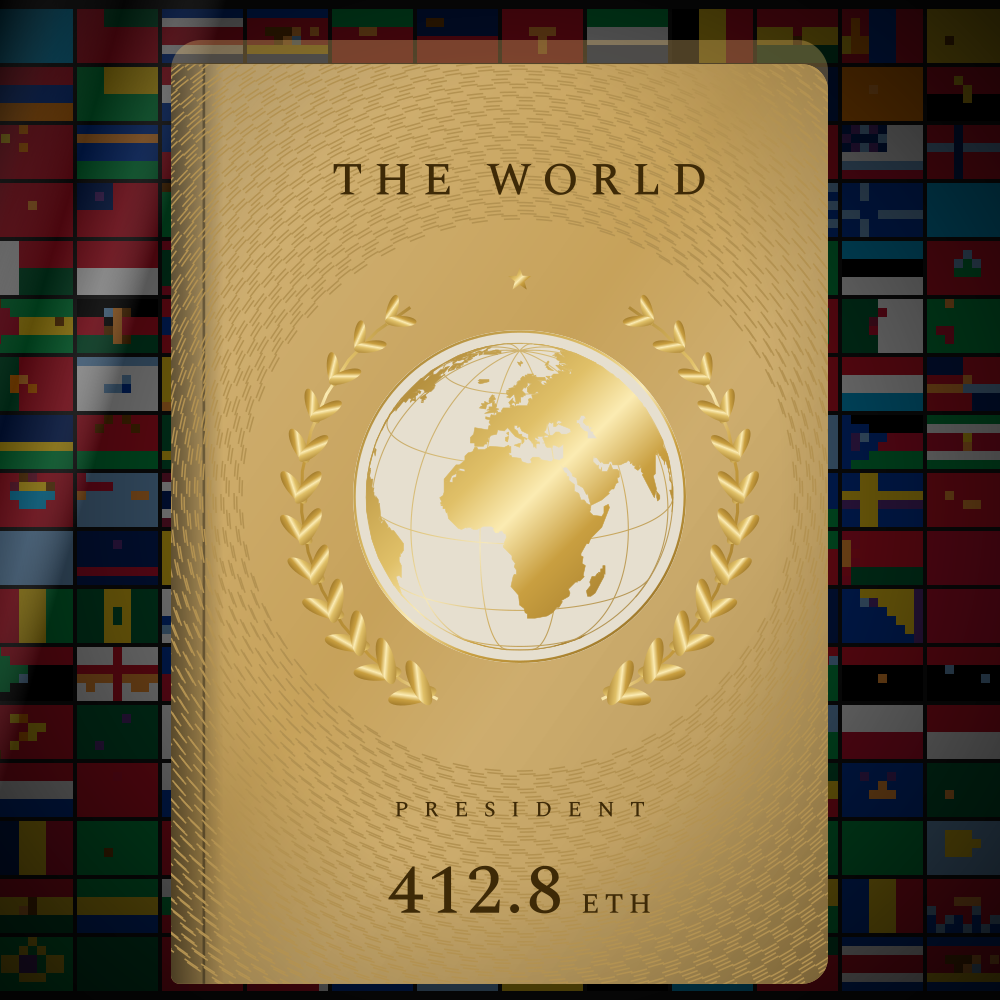
End of the game. The game ends the second the last country closes. From then on, President passports can’t be moved until someone declares the winner; anyone can. The biggest population becomes world president and takes the world treasury and the World President passport. On a tie, more President passports wins. If that’s a tie too, the treasury is split equally and each winner gets a Co-President passport.
Unclaimed money. A country treasury the president doesn’t take within 12 months goes to the world treasury, or, once the game is over, to the world president. If money waits in the world treasury 12 months and the world president doesn’t take it, the world treasury passes to the next wallet by population. Anyone can trigger these transfers.
6. Map colours
| Status | Meaning |
|---|---|
| No citizens | No passports yet. The first citizen becomes candidate. |
| Campaign | Under 50 passports. No countdown yet. |
| Election | 50+ passports. The 7-day countdown is on. |
| Closed | Has a president. |
The bar above the map shows the world treasury and who leads on population.
7. Edge cases
| If | Then |
|---|---|
| The candidate moves their passports to their own second wallet | That’s a new candidate: the 7 days start over, and anyone can overtake meanwhile. |
| The candidate sells before closing | Once another wallet holds more, that wallet is the candidate. Only what’s above second place is safe to sell. |
| Passports are sent to someone else | They count for the receiver. That’s how a community backs its own candidate. |
| Passports are split across wallets | Each wallet counts on its own, so splitting only makes each one smaller. |
| A bot mints the first passport everywhere | No countdown below 50. Anyone overtakes it with 2. |
| Someone mints or sends after the 7 days, before the inauguration | Rejected. The country already closed. |
| A closed country’s passport is still listed on a marketplace | It can’t be bought or moved. It will be burned. |
| Nobody wants a country | It stays open. Anyone can close it: 50 passports cost 0.065 ETH, 80% of that comes back as treasury and rent, and the population grows by 50. |
| A President passport is sold before the end | Its population counts for whoever holds it when the game ends. |
This page retells the contract. Where they differ, the contract wins.